Winter Driving in Montenegro: Tips for Mountain Roads
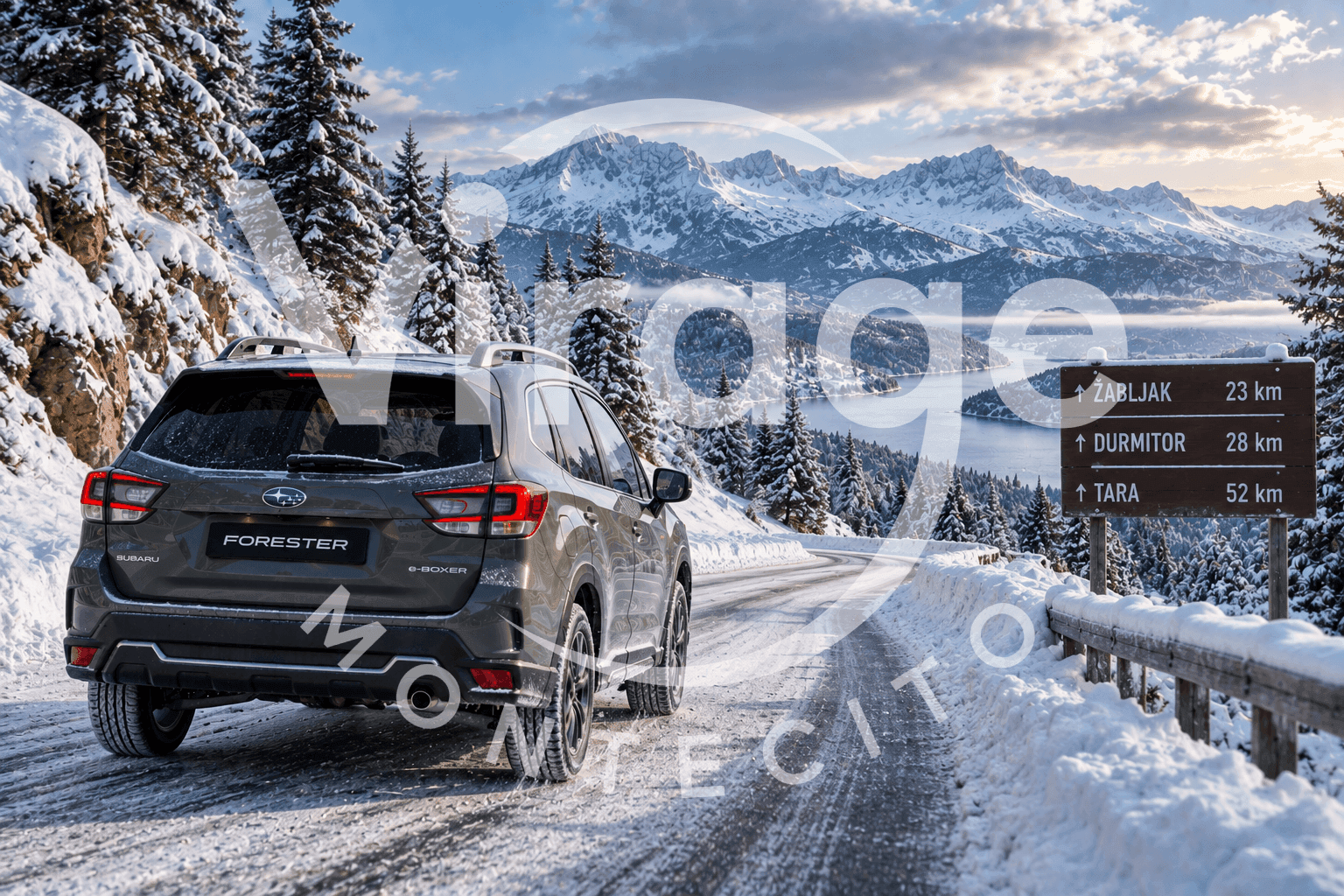
Montenegro has two weather faces in winter: the coast stays mild, with temperatures rarely dropping below freezing, while the north of the country — Durmitor, Bjelasica, Kolašin — gets a proper mountain winter with heavy snowfall. If you're planning to drive into the interior outside summer, here's what to know.
Where the snow falls
The mountainous north, including the roads to Žabljak, Kolašin, and Durmitor National Park, regularly sees snow from late autumn through spring. Even Lovćen, above Kotor, can carry snow while the coast just a few kilometers away shows no trace of winter at all.
Winter gear and regulations
On stretches crossing mountain passes, winter equipment (winter tires or chains) is often required by law during the winter period, typically from mid-November to early April. Check current regulations before you travel, and make sure the vehicle you're renting is properly equipped if a northern route is on your plan during that window.
Preparing the car before you set off
Before heading into the interior in winter, check tire pressure, battery condition, and the level of windshield washer fluid with a freeze-resistant winter formula. Bring a small snow scraper and a de-icer spray for locks and glass — morning frost can freeze doors shut even when daytime temperatures climb above zero. Also check that you have a spare tire or a tire repair kit, and that both are in working order.
Driving the mountain routes
The roads up to Lovćen above Kotor, toward Žabljak via Šavnik, or toward Kolašin and on to Mojkovac, climb through switchbacks and passes where conditions can shift quickly with elevation. You might leave the coast on a dry road and, after half an hour of climbing, run into snow or ice. That's why it matters not to judge conditions for the whole route based only on the weather at your starting point.
Practical driving tips
- Check the forecast for the specific mountain route, not just the town you're leaving from
- Fill up before entering the mountain section of the road — fuel stations are sparser
- Drive slower than you would in summer and leave more distance from the car ahead
- Keep warm clothing and a blanket in the car, even for a short drive
- Avoid driving mountain roads at night when snow is forecast
What to do if you're caught out by snow
- Slow down gradually and avoid sudden braking — stopping distances are considerably longer on snow and ice
- If the car starts to slide, ease off the accelerator and hold your direction with smooth, gentle steering
- If conditions worsen significantly, find the nearest safe place to pull over and wait for visibility and the road to improve, rather than pushing on through unsafe conditions
- Keep your phone charged and, for longer mountain drives, let someone know your planned route and expected arrival time
Common mistakes winter drivers make
The most common mistake is underestimating the gap between the coast and the north — drivers set off in a light jacket and on summer tires, assuming the whole trip will feel like the coast. Another is keeping the usual speed through familiar bends, even when there's ice under the wheels instead of dry asphalt. A third is checking the forecast only for the town of departure, rather than for the specific mountain destination.
Why AWD is especially useful in winter
Symmetrical AWD improves traction when starting off on snow or ice, particularly pulling away uphill at a light or junction where cars have to stop. Paired with winter tires, it meaningfully cuts the risk of slipping on mountain climbs.
Bottom line
Winter driving through northern Montenegro can be unforgettable — a white Durmitor is a sight you remember — but it takes preparation. Check the forecast, choose an AWD vehicle, and build in extra time. Virage Montecito offers Subaru vehicles fitted with winter equipment for routes into northern Montenegro during the winter period.
Ready to explore Montenegro yourself?